7 Tips How Do Beauty Tools Work for Global Buyers?

Time:2026-09-19 Author:Sophia
0%

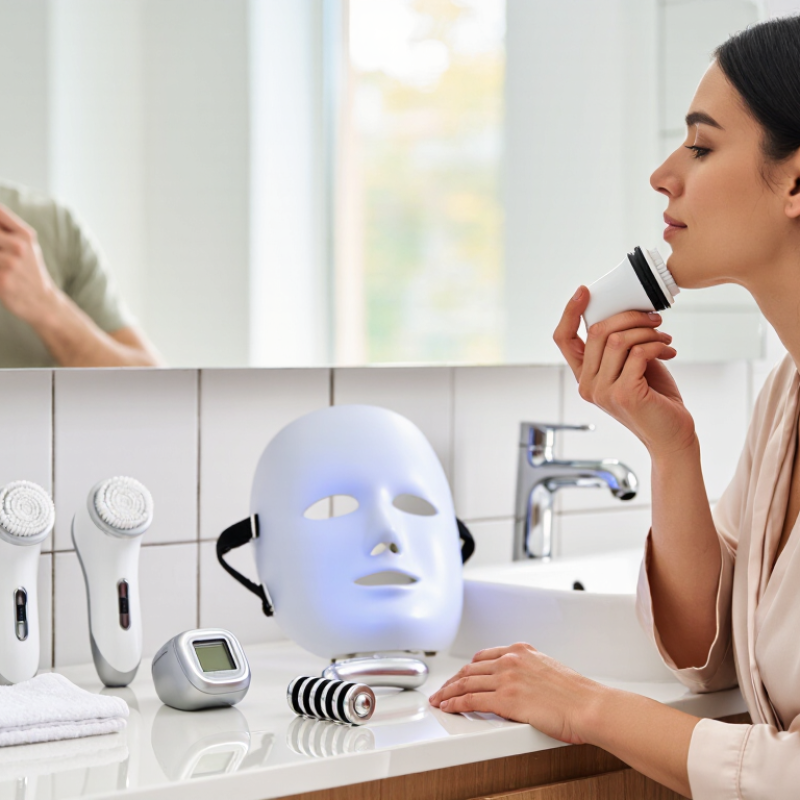
Beauty tools have moved from professional clinics into bathroom drawers, yet many global buyers still ask: how do beauty tools work? The answer depends on energy, contact, pressure, timing, and skin biology. A cleansing brush uses mechanical movement to loosen surface debris. LED devices deliver specific light wavelengths. Microcurrent tools apply low-level electrical current, while heated tools change surface temperature. These mechanisms are not interchangeable.

Market momentum is strong. McKinsey estimates that the global beauty industry could reach about $580 billion by 2027. Grand View Research also reports continued growth in the home-use beauty device market, driven by convenience and personalisation. However, market growth does not prove every product claim. The U.S. Food and Drug Administration distinguishes cosmetic tools from medical devices, making product classification and evidence essential for buyers.

Dermatologist Dr. Hadley King offers a useful caution: “More is not always better.” That principle matters when comparing intensity, frequency, and expected results. A bright screen may look impressive. It does not replace clinical evidence. Real performance depends on design, correct use, maintenance, and individual skin sensitivity.

This guide examines seven practical tips for understanding how do beauty tools work across international markets. It considers technology, safety instructions, measurable claims, user experience, and regional compliance. It also acknowledges an uncomfortable truth: some tools may improve appearance temporarily, while others may offer limited visible change. Buyers should question vague promises, inspect testing information, and treat dramatic before-and-after images carefully. Evidence first. Results vary.
7 Tips How Do Beauty Tools Work for Global Buyers?

Beauty Tool Categories and Their Core Working Principles

Beauty tools work through different physical principles, so global buyers should match the tool with its intended result. Cleansing brushes use soft vibration or rotating motion to loosen surface oil and debris. Exfoliating devices remove dead skin through gentle friction or controlled abrasion. Overuse can cause redness, even when the device feels comfortable. Massage tools rely on pressure, rolling, warmth, or vibration to support temporary relaxation and improved surface circulation.

Hair-removal tools use trimming, pulling, or carefully controlled light energy. Light-based devices require strict attention to skin tone, hair color, eye protection, and usage instructions. Facial steamers heat water into vapor, which may soften surface buildup but cannot replace professional treatment. Microcurrent devices deliver low electrical stimulation through conductive contact, while LED tools use selected wavelengths to support specific cosmetic routines. Their results can vary widely.

A reliable buying check includes motor speed, heat control, battery safety, charging voltage, and skin-contact materials. Look for clear manuals, measurable specifications, testing information, and suitable regional certifications. Waterproof claims need careful reading; splash resistance is not full immersion protection. I have found that quieter motors often feel more premium, but sound alone proves little. Users should patch-test new products and stop when discomfort continues. Some instructions remain vague, and that deserves scrutiny rather than trust. The best tool is not always the strongest one.

7 Tips: How Do Beauty Tools Work for Global Buyers?

Beauty tool categories and their core working principles, with representative LED phototherapy wavelengths.

The chart shows commonly used LED phototherapy bands: blue light is typically centered around 415 nm, red light around 633 nm, and near-infrared light around 830 nm. Actual specifications vary by device and safety standard.

1. Cleansing Brushes: Bristles or silicone surfaces create mechanical cleansing through gentle oscillation or vibration.
2. Ultrasonic Spatulas: High-frequency vibration, commonly around 20–30 kHz, helps loosen surface impurities and spread products.
3. LED Tools: Deliver selected visible or near-infrared wavelengths to the skin surface without ultraviolet exposure.
4. Radio-Frequency Devices: Use alternating electromagnetic energy, often in the radio-frequency range, to produce controlled tissue warming.
5. Microcurrent Devices: Apply very low electrical currents, generally measured in microamps, through conductive contact points.
6. IPL Devices: Emit broad-spectrum pulsed light, commonly covering approximately 500–1,200 nm depending on the filter and application.
7. Thermal Styling Tools: Transfer heat directly to hair; many professional straighteners and curling tools operate approximately between 150°C and 230°C.

How to Evaluate Safety, Materials, and Performance

7 Tips How Do Beauty Tools Work for Global Buyers?

Beauty tools work through controlled heat, vibration, pressure, light, or mechanical movement. Global buyers should examine the actual mechanism, not only attractive product claims. A heated tool needs stable temperature control and insulated surfaces. A vibrating device should feel balanced, with consistent speed and limited noise. Performance must remain steady after repeated use, not only during a short demonstration.

Tip 1: Check safety evidence. Ask for clear instructions, electrical test reports, and material declarations. Confirm the voltage, plug type, charging method, and automatic shut-off function. Review warnings for heat, moisture, skin contact, and cleaning. Requirements differ between markets, so buyers should verify local rules with qualified professionals. I have seen impressive samples fail because their documentation was incomplete. That mistake is easy to underestimate.

Tip 2: Evaluate materials closely. Skin-contact parts should feel smooth, stable, and easy to clean. Look for heat-resistant plastics, corrosion-resistant metals, and secure seams. Avoid strong odors, loose coatings, sharp edges, or unexplained surface changes. Tip 3: Test performance under realistic conditions. Measure heating time, temperature consistency, battery endurance, vibration strength, and noise. Record results from several units, not one perfect sample. Small differences matter. A tool that performs well but overheats the handle is not truly reliable. Buyers should also inspect packaging, spare parts, user feedback, and after-sales procedures before placing a large order.

Key Features Global Buyers Should Compare

Global buyers should compare beauty tools by measurable performance, not polished claims. Fortune Business Insights reported that the global beauty devices market reached USD 35.81 billion in 2023. It projects USD 96.09 billion by 2032. This growth makes specification checks essential. Start with output. For light devices, compare wavelength, irradiance, treatment area, and timer accuracy. For heated tools, check temperature range, sensor response, and heat recovery. A glossy shell proves little. Numbers matter.

Safety features deserve equal attention. Check insulation, overheat protection, battery testing, and relevant ingress protection ratings. Ask for independent test reports, not only a compliance label. For skin-contact parts, confirm material information and cleaning instructions. McKinsey estimates the global beauty industry could approach USD 580 billion by 2027, with annual growth near 6%. More demand may also mean more rushed products. Buyers should remain cautious.

Usability affects real performance. Compare weight, charging time, noise, replacement parts, manual languages, and warranty coverage. Voltage support from 100–240V can simplify international distribution. A clear fault indicator is better than a hidden warning. I would also test one full session before placing a large order. Marketing often shows perfect skin and perfect lighting. Actual use includes low battery, wet hands, and unclear settings. That is where weak design appears.

7 Tips How Do Beauty Tools Work for Global Buyers? - Key Features Global Buyers Should Compare

A practical comparison guide for evaluating beauty devices by technology, measurable specifications, safety, and international usability.

Beauty Tool How It Works Typical Technical Range Key Features to Compare Safety and User Compatibility Global-Buyer Checkpoints
LED Light Therapy Mask Delivers selected wavelengths of non-ionizing light to the skin surface. Red and near-infrared light are commonly used for cosmetic skin-rejuvenation applications, while blue light is commonly used in blemish-focused products. Red light: approximately 630–660 nm
Near-infrared light: approximately 810–850 nm
Blue light: approximately 415–465 nm
Exposure time: commonly 5–20 minutes per session
Compare
Wavelength accuracy, irradiance, treatment timer, LED coverage, eye protection, heat generation, and flexible versus rigid mask construction.
Users with light sensitivity or photosensitizing medication should seek professional advice. Eye protection is especially important for bright blue-light devices. Check photobiological safety documentation, charger compatibility, plug type, language of instructions, battery transport requirements, and applicable electrical certifications.
Microcurrent Facial Device Uses low-level electrical current delivered through conductive electrodes. The current is designed to pass across the skin while the user moves the device over conductive gel or serum. Low-level pulsed current
Multiple intensity levels are common
Conductive medium usually required
Typical sessions: approximately 5–15 minutes
Compare
Current consistency, polarity or waveform options, intensity control, electrode contact area, automatic shut-off, and battery life.
People with implanted electronic devices, certain heart conditions, or pregnancy should follow medical guidance before use. Avoid damaged skin and use only the recommended conductive medium. Review electrical output specifications, waterproofing claims, rechargeable-battery documentation, USB or adapter requirements, and translated operating instructions.
Radio-Frequency Skin Device Uses radio-frequency energy to produce controlled heating in targeted skin layers. The device normally includes temperature monitoring or timed energy delivery to help manage treatment intensity. Common operating frequencies include approximately 0.5–2 MHz
Contact-temperature controls may be included
Treatment time varies by area and device design
Compare
Frequency, power output, temperature sensor, cooling function, contact detection, treatment head size, and energy-control modes.
Users with implanted metal or electronic devices, active skin conditions, reduced heat sensitivity, or certain medical conditions should obtain professional advice before use. Ask for test reports covering electrical safety, electromagnetic compatibility, thermal protection, duty cycle, regional voltage, and authorized service procedures.
Ultrasonic Skin Scrubber Uses high-frequency mechanical vibration at a moistened metal spatula to help loosen surface debris and excess oil. It does not provide the same function as an ultrasonic imaging or medical device. Common cosmetic-device frequencies: approximately 20–40 kHz
Several vibration modes may be available
Water or water-based product normally required
Compare
Vibration frequency, blade angle, intensity levels, continuous operating time, waterproof rating, charging method, and cleaning requirements.
Use on damp skin and avoid active infections, open wounds, severe irritation, or excessive pressure. Do not use a damaged spatula or charging cable. Verify the stated IP rating rather than relying on “waterproof” wording. Compare battery type, charging connector, spare spatula availability, and regional user manuals.
IPL Hair-Removal Device Emits intense pulsed broad-spectrum light. Melanin in the hair absorbs part of the light and converts it into heat, which can reduce regrowth when used according to the device instructions. Broad-spectrum output is commonly filtered within approximately 500–1,200 nm
Multiple fluence levels are common
Skin-tone sensors may be included
Compare
Fluence, flash window size, flash rate, skin-tone sensor, cooling system, lamp lifetime, precision mode, and treatment-area coverage.
Effectiveness and suitability depend strongly on hair and skin color. Avoid use on tattooed or very dark areas unless specifically permitted. Follow eye-safety and medication warnings. Check regional product classification, optical-safety testing, replacement-lamp policy, voltage compatibility, service support, and mandatory warnings for each target market.
Facial Cleansing Brush Uses rotating, oscillating, or sonic movement to create mechanical cleansing action on the skin with a cleanser and water. Silicone heads generally differ from fiber-bristle heads in feel and cleaning requirements. Sonic models may specify vibration frequency
Commonly 2–5 intensity levels
Timed cycles often include approximately 60 seconds or more
Compare
Movement type, head material, intensity control, timer zones, brush-head replacement interval, charging time, and noise level.
Use gentle pressure and avoid irritated or broken skin. Replace detachable heads according to hygiene guidance and clean the device after each use. Compare replacement-head supply, material declarations, waterproof testing, battery transport information, packaging language, and recycling instructions.
Facial Steamer Heats water and releases warm vapor near the face. The vapor can temporarily soften surface debris and improve the feeling of hydration, but it does not permanently open or close skin pores. Water tank capacity commonly: approximately 50–150 mL
Warm-up time often: approximately 30–120 seconds
Automatic shut-off is widely used
Compare
Steam temperature, mist particle design, tank capacity, warm-up speed, automatic shut-off, nozzle position, and descaling procedure.
Keep a safe distance from the nozzle and avoid excessive heat. People with heat-sensitive skin, rosacea, breathing conditions, or certain skin disorders should seek professional advice. Check voltage and frequency, plug standards, thermal cut-off testing, water-quality requirements, leak resistance, packaging protection, and spare-part availability.

Buyer tip: Technical figures are typical ranges used for product comparison, not universal specifications. Always verify the final model’s test reports, user manual, intended-use statement, and market-specific compliance requirements before purchase.

Choosing Beauty Tools for Different Skin and Hair Needs

7 Tips How Do Beauty Tools Work for Global Buyers?

Choosing Beauty Tools for Different Skin and Hair Needs

Beauty tools should match skin sensitivity, oil levels, hair texture, and styling habits. McKinsey & Company’s 2023 beauty report projects the global beauty market to reach about $590 billion by 2028. That growth creates more choices, but more choices can also confuse buyers.

For dry or sensitive skin, select tools with soft surfaces, adjustable intensity, and limited heat exposure. A short cleansing session is usually more practical than aggressive daily scrubbing. Oily skin may tolerate deeper cleansing, yet excessive friction can increase irritation. Always test a new tool on a small area first. Skin can react unpredictably.

Hair needs a separate decision. Fine hair benefits from lower temperatures and lightweight tools. Thick or textured hair often needs controlled heat, wider attachments, or a diffuser. Look for clear temperature settings and automatic shutoff features. The International Organization for Standardization recommends risk-based product design, which supports checking instructions, electrical safety, and material quality before purchase. In practical product evaluations, I have found that comfort affects regular use more than impressive specifications. My first choice is not always right. Buyers should reconsider tools that tug, overheat, or require complicated routines. Short routines work better.

Buying, Using, and Maintaining Beauty Tools Internationally

International beauty-tool buying starts with compatibility, not appearance. Check the voltage range, plug shape, wattage, and charging method before ordering. A plug adapter changes the connection, but it may not change voltage. Confirm this point in the instruction manual.

Check the plug. Small details matter.

For international use, choose tools with clear safety information and accessible customer support. Review local electrical and consumer-safety requirements before payment. Keep the invoice, warranty terms, and product specifications. They can matter when a tool arrives damaged or performs differently. I also check return conditions, because overseas shipping can be expensive and slow.

Use the lowest suitable heat or intensity setting at first. Follow the recommended contact time, especially when a tool touches facial skin or hair. Clean removable parts after each use with the approved method. Never immerse electrical sections unless the manual clearly permits it. Keep it dry. Do not share attachments without cleaning them properly. Store the tool in a cool, dry place, with its cable loosely arranged. Batteries need careful handling during international travel; check carrier instructions before packing them. I once focused too much on design and overlooked replacement accessories. That mistake made maintenance harder. A better checklist includes spare parts, cleaning guidance, language support, and realistic after-sales service. Not every “universal” tool works everywhere. Recheck the details.

FAQS

What specifications should global buyers compare in light-based beauty tools?

Compare wavelength, irradiance, treatment area, and timer accuracy. Numbers matter more than polished claims. Ask for test data. A glossy shell proves little.

Which safety features deserve close attention?

Check insulation, overheat protection, battery testing, and ingress protection ratings. Request independent test reports. Also confirm skin-contact materials and cleaning instructions.

How can buyers check international compatibility?

Review voltage range, plug shape, wattage, and charging method. A plug adapter does not change voltage. Check the manual carefully.

What should buyers test before placing a large order?

Test one complete session under realistic conditions. Try low battery, damp hands, and unclear settings. Weak design often appears there.

Which tools suit dry or sensitive skin?

Choose soft surfaces, adjustable intensity, and limited heat exposure. Test a small area first. Skin reactions can be unpredictable.

How should tools match different hair types?

Fine hair usually needs lower temperatures and lightweight tools. Thick or textured hair may need wider attachments or a diffuser. Avoid tools that tug or overheat.

How should beauty tools be cleaned and stored?

Clean removable parts after each use with the approved method. Never immerse electrical sections without clear permission. Keep the tool dry and store it in a cool place.

What support details should international buyers review?

Check warranty coverage, replacement parts, manual languages, and return conditions. Keep the invoice and specifications. Overseas returns can be slow and expensive.

How can buyers make daily use more practical?

Compare weight, charging time, noise, heat recovery, and fault indicators. Short routines work better. I once focused too much on design and missed replacement accessories.

Conclusion

This guide explains how do beauty tools work by examining the main categories, including cleansing devices, hair styling tools, facial massagers, light-based equipment, and at-home grooming accessories. It describes their core working principles, such as mechanical movement, controlled heat, gentle vibration, airflow, or carefully managed light, while showing buyers how to assess safety, material quality, durability, power requirements, and performance. Special attention is given to user comfort, adjustable settings, skin contact, heat control, and clear instructions.

Global buyers will also learn which features to compare, including portability, charging methods, replacement parts, waterproof design, and ease of cleaning. The guide connects tool selection with different skin and hair needs, helping readers choose suitable functions without overuse. It also covers practical international purchasing considerations, safe operation, storage, maintenance, voltage compatibility, and responsible use according to local requirements, so beauty tools can remain effective, hygienic, and convenient over time.

Sophia

Sophia

Sophia is a dedicated marketing professional with an exceptional depth of knowledge about her company's products and services. With a keen understanding of market trends and customer needs, she crafts insightful blog posts that not only inform but also engage readers, enriching the company’s online......