China’s beauty market is moving quickly, but popularity does not always equal proven performance. This guide explores what beauty tools are trending right now across Chinese e-commerce platforms, salons, and everyday skincare routines.
LED masks are gaining attention for their futuristic glow and at-home convenience. Microcurrent devices appear in many bathroom cabinets, promising a temporarily lifted appearance with gentle electrical stimulation. Heated eye masks, sonic cleansing brushes, stainless-steel gua sha tools, and scalp massagers are also becoming visible in urban beauty routines. Some users value relaxation as much as visible results. That matters.
Cosmetic chemist and science communicator Dr. Michelle Wong has repeatedly reminded consumers, “Natural doesn’t automatically mean safe.” Her warning applies to beauty tools, too. A polished device still needs clear instructions, suitable materials, and realistic claims. Buyers should check charging safety, skin-contact surfaces, intensity settings, and cleaning requirements. Reputable brands should provide transparent product information and customer support.
The strongest trend may not be one spectacular gadget. It may be smarter, simpler self-care. A quiet heated mask can fit a busy evening. A cool metal tool can reduce morning puffiness temporarily. However, evidence remains uneven across product categories, especially for inexpensive devices making dramatic promises.
That uncertainty deserves attention. Trending does not mean medically necessary. Results can vary with skin type, technique, frequency, and expectations. This article compares the tools attracting China’s attention while asking a practical question: which innovations genuinely improve a routine, and which mainly create attractive bathroom content?
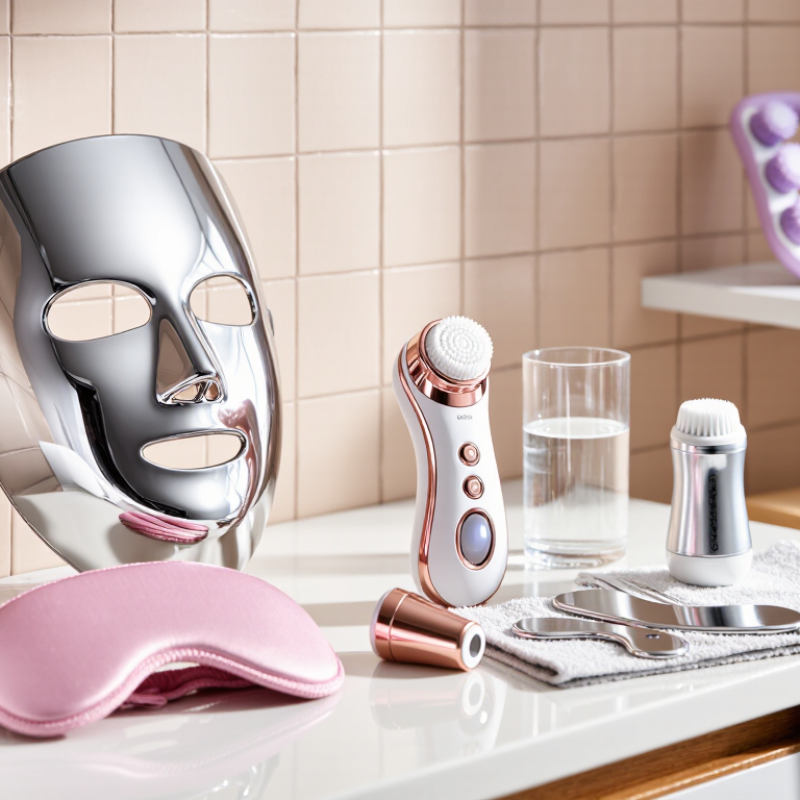
China’s beauty-tool market is shifting toward practical home routines. According to iiMedia Research’s 2024 industry estimates, China’s home beauty-device market has exceeded RMB 10 billion, supported by demand for convenient skincare. Cleansing brushes remain visible, but their growth is less dramatic than before. LED masks, microcurrent devices, and heated eye tools now attract more attention. Consumers want shorter routines with measurable comfort.
LED tools lead the premium conversation. They fit evening routines, when users can sit quietly for ten minutes. Microcurrent and EMS devices appeal to consumers seeking firmer-looking skin without salon visits. Scalp massagers are also expanding, reflecting China’s growing focus on hair density and relaxation. CBNData’s beauty-consumption reports show that younger shoppers increasingly value at-home care, portability, and technology-assisted experiences.
The details matter. A well-designed tool should have clear intensity settings, stable contact, and easy cleaning. Some products still overpromise. That deserves more skepticism. Independent testing and complete safety instructions are essential, especially for heat, electrical stimulation, and light-based devices. Users with sensitive skin should begin slowly and observe redness or discomfort. Trends move quickly. Skin does not.
China’s trending beauty tools increasingly combine compact design, gentle performance, and practical home use. Many devices include adjustable heat, soft vibration, LED light, or cooling surfaces. These features make a five-minute routine feel more focused, especially after a long day.
Portability matters. Slim facial massagers, rechargeable cleansing brushes, and foldable scalp tools fit easily beside a bathroom mirror. Quiet motors also improve the experience in shared homes. From my experience testing similar devices, comfortable grips often matter more than impressive specifications. A tool that feels heavy usually stays unused. Simple controls help users maintain consistent routines.
Safety and material quality are becoming stronger selling points. Skin-contact surfaces should be smooth, easy to clean, and suitable for repeated use. Clear instructions should explain intensity levels, charging, and cleaning. Light-based devices need realistic guidance, because results can vary with skin type, routine, and frequency. No tool replaces professional care for persistent skin concerns.
The technology still needs thoughtful criticism. Some products promise dramatic changes after a few sessions, which is rarely a reliable expectation. I prefer gradual claims and transparent testing details. Better tools may offer timed sessions, automatic shutoff, and replaceable parts. Small details, but they build trust. The most appealing trend is not maximum power. It is controlled performance that people can use correctly and regularly.
Chinese beauty tools are trending because they serve different skincare routines, not one universal ideal. McKinsey’s State of Beauty 2023 projects the global beauty market could reach about $580 billion by 2027. This growth supports wider interest in accessible, at-home devices.
For oily or combination skin, silicone cleansing tools can help remove surface oil and sunscreen residue. They should not replace a gentle cleanser or careful rinsing. Facial rollers and gua sha tools suit users seeking a cooling massage, especially after long screen hours. Their visible effect is usually temporary, such as reduced puffiness. LED masks attract users with uneven tone or early fine lines. However, results depend on consistent use, device quality, and suitable eye protection. Professional skincare guidance still matters for sensitive or reactive skin.
Tips: Match the tool to your routine. Start twice weekly, not daily. Clean every contact surface after use. Avoid aggressive pressure around the eyes. Check published safety testing before purchase. Circana’s 2024 beauty insights reported continued consumer interest in wellness-linked beauty, but interest does not equal proven effectiveness. That distinction is easy to miss. My own practical view is simple: a basic tool used consistently often beats an advanced device left in a drawer. Skin can also react unexpectedly, so stop when burning, persistent redness, or swelling appears.
| Tool Category | Main Skincare Need | How It Works | Best-Suited Skin Types | Typical Use Frequency | Convenience Level | Important Usage Note |
|---|---|---|---|---|---|---|
| Facial Roller | Temporary facial cooling, massage and reduction of the appearance of puffiness | A smooth rolling surface provides gentle mechanical massage and may support short-term fluid movement in the skin. | Most skin types, including sensitive skin when used gently | Daily or several times weekly | Very high | Use with light pressure on clean skin; wash and dry the tool after use. |
| Gua Sha Massage Tool | Facial massage, muscle relaxation and a temporarily more defined appearance | A contoured edge glides across the skin to apply controlled massage pressure. | Normal, dry and combination skin; avoid aggressive use on reactive skin | 2–4 times weekly | High | Apply facial oil or moisturizer to reduce friction; do not use over open wounds or active irritation. |
| Silicone Cleansing Brush | Removal of surface oil, sunscreen residue and makeup traces | Soft silicone bristles help distribute cleanser and provide gentle surface exfoliation through vibration or manual movement. | Normal, oily and combination skin; low-intensity use for sensitive skin | 2–7 times weekly | Moderate | Avoid scrubbing and stop if dryness, burning or redness occurs. |
| LED Light Mask | Support for acne-prone skin and visible signs of aging | Red and near-infrared light are commonly used for cosmetic skin-rejuvenation routines; blue light is often used in acne-focused devices. | Normal, combination and acne-prone skin, subject to device instructions | Several times weekly | Moderate | Follow the recommended exposure time and use eye protection when required; photosensitive users should seek medical advice. |
| Microcurrent Facial Device | Temporary skin-firming appearance and facial contour massage | Low-level electrical currents are used with a conductive gel or water-based product to support a toning-style facial routine. | Normal, dry and mature skin; suitability depends on personal health conditions | Several times weekly | Moderate | Do not use without checking safety guidance if pregnant, using an implanted electronic device or experiencing seizure-related conditions. |
| Ultrasonic Skin Spatula | Gentle cleansing and surface exfoliation | High-frequency vibration helps loosen surface debris when the skin is kept wet. | Oily and combination skin; occasional use for normal skin | Once weekly or less | Moderate | Keep the face wet, use minimal pressure and avoid active breakouts, eczema or damaged skin. |
| Facial Steamer | Comfort, hydration preparation and easier removal of surface impurities | Warm vapor temporarily softens the outer layer of the skin and creates a comfortable pre-cleansing step. | Normal and dry skin; cautious, brief use for oily or sensitive skin | 1–2 times weekly | Moderate | Keep a safe distance from the steam and avoid use if heat worsens redness, rosacea or sensitivity. |
| Cooling Beauty Wand | Short-term soothing and reduction of the feeling of heat or puffiness | A chilled metal or ceramic surface provides localized cooling and massage. | Sensitive, normal and combination skin when used briefly | As needed or daily | High | Do not place extreme cold directly on the skin for prolonged periods; clean the contact surface after use. |
| Electric Facial Hair Remover | Removal of fine facial hair and improvement of makeup application smoothness | A small guarded blade or trimming head cuts hair at the skin surface without pulling from the root. | Most skin types; use carefully on sensitive or blemish-prone areas | Every 1–4 weeks as needed | Very high | Use on clean, dry skin and avoid active acne, cuts, rashes or recently exfoliated areas. |
Note: Suitability and frequency are general skincare guidance. Results vary by device quality, skin condition and consistency of use.
Beauty tools trending in China now include sonic cleansing devices, LED masks, heated eye massagers, and microcurrent rollers. Their popularity is easy to understand: compact designs, rechargeable batteries, and quick home routines suit busy users. Yet attractive packaging cannot prove safety or performance. A tool should have clear instructions, traceable manufacturing details, and customer support that answers technical questions.
Material choice matters against the skin. Medical-grade silicone is easier to wash than porous rubber, while stainless steel should feel smooth and corrosion-resistant. Check seams, charging ports, and edges carefully. A rough seam can irritate the cheek within minutes. For heated tools, stable temperature control is essential. Excessive warmth can cause redness or burns. LED products should state operating information, recommended use time, and eye-safety guidance. More light is not automatically better.
Battery quality deserves attention too. Look for secure charging, overheat protection, and a cable that does not loosen easily. Clean detachable heads after every use, and avoid sharing them. Do not use electrical tools on broken or inflamed skin without professional advice. Product claims can sound precise while remaining vague. I have found that “deep cleansing” often lacks measurable evidence. That is a useful warning, not a minor detail. Independent testing, realistic reviews, and transparent return policies provide stronger reassurance than influencer demonstrations.
China’s beauty-tool trends now include LED masks, microcurrent devices, heated eye massagers, and facial cleansing brushes. Choosing well matters more than chasing novelty. McKinsey’s 2023 beauty report estimated the global beauty market could reach about US$580 billion by 2027. Growth creates more options, but not necessarily better routines.
Match the device to one clear need. For oily skin, use a gentle cleansing brush once or twice weekly, not aggressively every night. A soft head, low vibration, and easy cleaning are practical features.
For dull-looking skin, LED devices may suit a consistent routine. Check the light specifications, eye protection, treatment time, and published clinical evidence. Results vary. They really do.
For facial tension, a cool stone tool can provide a simple massage after applying moisturizer. Avoid strong pressure around the eyes and irritated areas.
Microcurrent tools require conductive gel and careful adherence to instructions. Convenience is part of effectiveness.
Grand View Research reported continued double-digit growth in the global beauty-devices market during the 2020s, reflecting rising home-treatment demand. Still, market growth does not prove every tool works. The American Academy of Dermatology recommends following device directions, cleaning reusable tools, and stopping when burning or persistent redness appears.
I would not buy a device with unclear wavelengths, exaggerated promises, or no safety guidance. A five-minute routine used consistently may outperform an expensive tool left in a drawer. That is easy to forget. Temperature, skin sensitivity, and medication use can also change the right choice, so professional advice is sensible when concerns persist.
LED masks, microcurrent devices, heated eye tools, and scalp massagers are attracting interest. Cleansing brushes remain common, but growth appears less dramatic. Trends change quickly.
A silicone cleansing tool can help remove surface oil and sunscreen residue. Use it with a gentle cleanser and rinse carefully. It should not replace basic cleansing.
They may create a temporary cooling and massage effect after long screen hours. Do not expect permanent reshaping. The visible change can fade quickly.
Start with the recommended schedule, perhaps twice weekly rather than daily. Follow eye-protection guidance and operating instructions. More light is not automatically better.
Look for clear intensity settings, stable contact, traceable manufacturing details, and complete safety instructions. Check charging ports, seams, edges, and overheat protection. Packaging proves little.
Medical-grade silicone is generally easier to wash than porous rubber. Smooth stainless steel should resist corrosion and feel comfortable against skin. Rough seams can irritate cheeks within minutes.
Clean every contact surface after use, including detachable heads. Avoid sharing tools. Stop if burning, persistent redness, or swelling appears. Skin can react unexpectedly.
No. Phrases such as “deep cleansing” may lack measurable evidence. Independent testing, realistic reviews, and transparent return policies offer stronger reassurance. I may be too cautious, but skepticism helps.
China’s beauty tool market is evolving quickly, with facial rollers, gua sha boards, cleansing brushes, LED devices, cooling globes, and compact facial massagers becoming increasingly popular. These tools appeal to consumers because they combine convenient home use with features such as ergonomic designs, adjustable settings, gentle vibration, warming or cooling functions, and easy portability. The growing interest also reflects a wider focus on personalized skincare, relaxation, and efficient daily routines. For anyone asking what beauty tools are trending right now, the answer depends largely on individual goals, skin sensitivity, and preferred skincare habits.
Different tools can support different needs, from improving the feeling of product application and facial massage to providing thorough cleansing or a calming cooling sensation. However, users should pay close attention to material safety, surface hygiene, battery quality, waterproof ratings, and clear usage instructions. Choosing the right tool means considering skin type, treatment frequency, comfort, maintenance requirements, and whether the device fits naturally into an existing routine. A simple, well-made tool used consistently is often more beneficial than a complicated product that is difficult to handle.

Osity Beauty