Why Are the Best Chinese Beauty Tools So Popular?

Time:2026-10-19 Author:Sophia
0%

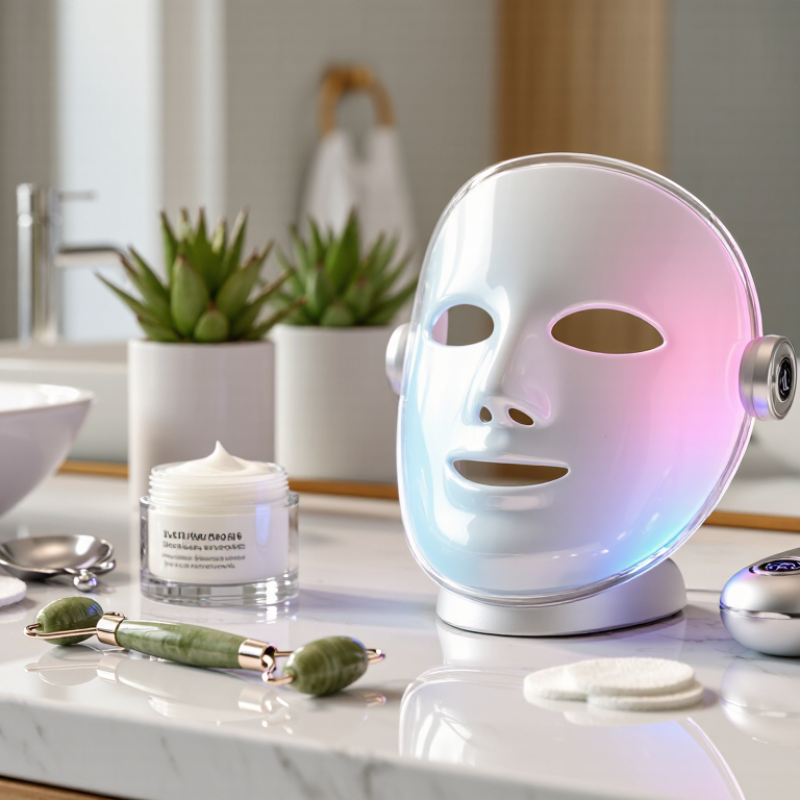
Why are beauty tools becoming so popular? The answer begins with a visible shift in daily beauty habits. Consumers now expect more control, personalization, and measurable results at home. A chilled facial roller, LED mask, or microcurrent device can turn a small bathroom into a treatment space. The ritual feels practical, visual, and shareable.

McKinsey & Company’s 2023 beauty report valued the global market at about $430 billion and projected nearly 6% annual growth through 2027. Its analysis also identified wellness, personalization, and technology as major forces shaping beauty purchases. Circana reported that U.S. prestige beauty sales increased 14% during the first half of 2024. Skincare remained one of the strongest categories. These figures help explain why beauty tools attract both consumers and retailers.

Cosmetic chemist Perry Romanowski offers a useful caution: “Cosmetics are not magic; they work because of chemistry.” His point matters here. A device may support cleansing, massage, or product application, but it cannot replace evidence-based skincare or professional medical advice. Results also depend on correct use, skin condition, and realistic expectations.

That is the more honest answer.

Beauty tools are popular because they combine convenience, sensory experience, and technology. Some also create a feeling of control during uncertain routines. However, popularity is not proof of effectiveness. Product claims should be checked against safety guidance, clinical evidence, and independent testing. This article examines the market’s momentum, the psychology behind at-home rituals, and the limits consumers should consider before buying.
Why Are the Best Chinese Beauty Tools So Popular?

Product Scope: Gua Sha, Brushes, Hair Tools, and Home Devices

Why Are the Best Chinese Beauty Tools So Popular?

Chinese beauty tools attract attention because they combine practical design, accessible pricing, and daily ritual. The product scope is broad. Gua sha tools support gentle facial massage, while dense brushes help distribute masks or cleansers evenly. Hair tools focus on controlled heat, airflow, and quick styling. Home devices add functions such as cleansing, warming, or light-based care. McKinsey’s 2023 beauty report projects the global beauty market may reach about $590 billion by 2028. This growth supports demand for convenient tools used at home. Grand View Research also estimates the global beauty devices market will expand strongly through 2030, although market definitions differ between reports.

Tips: Choose a smooth gua sha with rounded edges. Test brush softness against your inner wrist. For hair tools, check temperature controls and automatic shutoff. Read safety instructions carefully. Small details matter. Clean removable parts after use, especially near water. A tool can look elegant yet feel awkward after five minutes. That is where many reviews become too generous. My own evaluation would include grip comfort, noise, cleaning time, and skin response over several weeks. Results also depend on technique, hair texture, and consistent use. No device should replace professional care when irritation or pain continues.

Market Demand: China’s Cosmetics Sales Exceeded RMB400B in 2023 (NBS)

Why Are the Best Chinese Beauty Tools So Popular?

China’s cosmetics market gives this question a powerful context. According to the National Bureau of Statistics, cosmetics sales exceeded RMB400 billion in 2023. That figure shows more than commercial growth. It reflects millions of daily choices, from a compact mirror on a train to a facial roller beside a bathroom sink.

High demand encourages better design and wider access. Chinese consumers often expect beauty tools to be practical, attractive, and reasonably priced. A good brush should hold its shape after washing. A makeup sponge should feel soft without tearing quickly. Small details matter, especially when people compare products through short videos, reviews, and personal demonstrations. Retail data can explain market scale, but hands-on use reveals comfort, durability, and cleaning difficulty.

That balance is not always perfect. Popular tools may look refined but still have weak handles or unclear care instructions. I have also found that a low price can hide higher replacement costs. This is where professional reviews become useful. They should describe materials, testing methods, skin contact, and realistic usage time. Claims need evidence, not excitement. Consumers are becoming more careful, although impulse buying remains common. A beautiful package can influence the first purchase. Daily performance decides whether the tool stays in the drawer.

Supply Edge: China Held 31% of Global Manufacturing Value Added (World Bank)

Why Are the Best Chinese Beauty Tools So Popular?

China’s manufacturing scale helps explain the popularity of its beauty tools. The World Bank reports that China held 31% of global manufacturing value added. That share supports a deep supply network, from steel processing and plastic molding to packaging and precision assembly. Beauty tools can move between specialized suppliers quickly. This often reduces production time and keeps prices competitive.

In practical product checks, small details matter. A well-made eyelash curler should open smoothly and hold its shape. A facial roller should feel balanced, with clean edges and stable moving parts. Chinese factories can refine these details through repeated sampling and large-volume feedback. However, manufacturing strength does not guarantee perfect quality. Some tools may have uneven coatings, loose joints, or packaging that promises too much. Careful inspections remain necessary. This is where buyers sometimes become careless.

Tips: Check material descriptions, joint movement, surface finishing, and cleaning instructions. For metal tools, look for corrosion-resistant materials and consistent polishing. Test comfort gently before regular use. Supplier audits, sample comparisons, and clear quality standards improve reliability. A low price can be useful, but it should not replace inspection. Ask for measurable specifications, not vague claims. Small checks prevent disappointing purchases.

Digital Reach: 1.09B Chinese Users Drive Beauty-Tool Discovery (CNNIC)

Why Are the Best Chinese Beauty Tools So Popular?

China’s beauty-tool boom is increasingly a digital discovery story. According to CNNIC’s 54th Statistical Report, China had 1.092 billion internet users by December 2023. Internet penetration reached 77.5%. This scale makes product education part of daily browsing. Short videos show bristle movement, grip comfort, and cleaning routines within seconds. Real users often demonstrate tools beside a bathroom mirror, not inside a studio.

CNNIC also recorded 915 million online shoppers during the same period. That audience can compare specifications, watch tutorials, and read detailed feedback before purchasing. McKinsey’s 2024 China Consumer Report highlights the growing importance of digital engagement and value-conscious shopping. For beauty tools, value means more than a low price. Buyers examine material quality, skin contact, battery life, water resistance, and replacement costs. Small details matter.

Performance still needs proof. A viral demonstration may hide weak durability. It may also exaggerate results. That is the uncomfortable part. Reliable evaluation should include repeated use, cleaning tests, and transparent user comments. Tools that explain their design clearly often gain stronger trust online. Professional reviews, safety guidance, and measurable specifications help separate useful innovation from attractive content. Sometimes, the simplest tool wins.

Value & Innovation: McKinsey Forecasts 6% Annual Beauty Growth Through 2027

Why Are the Best Chinese Beauty Tools So Popular?

Chinese beauty tools are gaining attention because they combine practical design, attractive prices, and fast product innovation. McKinsey forecasts about 6% annual beauty market growth through 2027. That prediction reflects stronger consumer demand, not just social media excitement. Buyers increasingly want salon-like routines at home. They also expect reliable results without paying premium prices. Lightweight facial massagers, cleansing devices, and styling tools show this shift clearly. Good tools save time. Small details matter.

Value does not mean careless production. Many Chinese manufacturers improve molds, battery systems, packaging, and user instructions through rapid testing. This creates useful features at accessible prices. However, popularity should not replace careful judgment. A low price can hide weak materials or confusing controls. I still question products that promise dramatic changes overnight. Professional advice remains important, especially for sensitive skin or frequent device use. Check safety information, material quality, return policies, and independent reviews before buying. McKinsey’s forecast suggests growth, but growth alone does not prove quality.

Tips: Compare two or three tools with similar functions. Read the full instructions. Clean removable parts after use. Start with the gentlest setting. Stop if your skin feels painful or unusually irritated. Keep expectations realistic. A better routine may matter more than a more expensive device.

Why Are the Best Chinese Beauty Tools So Popular?

Value and innovation signals shaping the Chinese beauty-tool market

Dimension Verified Market Data or Observation How It Supports Beauty-Tool Demand Value or Innovation Signal
Beauty-market growth 6% annual growth
McKinsey forecasts approximately 6% annual growth for China’s beauty market through 2027.
A growing market creates room for new at-home devices, applicators, massage tools, cleansing tools, and styling accessories. Beauty tools can participate in long-term category expansion without depending only on premium cosmetics.
At-home beauty routines Consumers increasingly use beauty products and routines at home, supported by e-commerce, social content, and direct product education. Tools make routines more convenient, repeatable, and easier to demonstrate through short-form video and livestream content. Compact design, simple operation, and clear visual results improve everyday usability.
Value-for-money positioning Chinese consumers are widely described as becoming more selective about value, balancing performance, design, safety, and price. Well-designed tools can offer a reusable solution instead of requiring repeated purchases of single-use accessories. Durability, replaceable parts, multifunctionality, and transparent specifications strengthen perceived value.
Multifunctionality Multifunctional beauty products and devices align with consumer demand for convenience and simplified routines. One tool can support several steps, such as cleansing, massage, application, shaping, or drying, depending on its design. Interchangeable heads, adjustable settings, and portable formats create more use cases within one product.
Digital commerce compatibility China has one of the world’s most developed e-commerce ecosystems, with product discovery and education strongly connected to digital platforms. Beauty tools are highly suitable for demonstration because their operation and results can be shown visually. Instructional content, comparison demonstrations, and user-generated reviews reduce purchase uncertainty.
Fast product iteration China has extensive manufacturing capacity across consumer electronics, plastics, precision components, packaging, and small household appliances. Manufacturers can test new structures, materials, colors, accessories, and packaging formats relatively quickly. Shorter development cycles support frequent improvements in ergonomics, portability, charging, and user experience.
Portability Urban lifestyles and frequent travel increase the practical value of compact personal-care products. Small tools are easier to store, carry, use in shared spaces, and include in daily or travel routines. USB charging, cordless operation, protective cases, and lightweight construction enhance convenience.
Design and aesthetics Beauty purchases are influenced not only by function but also by appearance, tactility, packaging, and suitability for social sharing. Attractive tools can become visible parts of a personal-care routine rather than hidden accessories. Minimalist forms, soft-touch materials, coordinated colors, and gift-ready packaging increase appeal.
Safety and compliance Products that make cosmetic or personal-care claims in China are subject to applicable product, quality, labeling, and cosmetics regulations. Clear instructions and responsible claims help consumers understand correct use and reduce avoidable misuse. Material disclosure, usage limits, testing information, warranty support, and compliant labeling build trust.
Sustainability and longevity Consumers and regulators are paying greater attention to packaging waste, product life, energy use, and responsible consumption. Reusable tools can reduce reliance on disposable accessories when they are durable and properly maintained. Repairability, recyclable packaging, low-energy operation, and long service life provide measurable value beyond appearance.

Source reference: McKinsey & Company, analysis of China’s beauty market and its forecast of approximately 6% annual growth through 2027. Other observations summarize publicly documented consumer, e-commerce, manufacturing, and regulatory trends; no company or brand-level data is included.

FAQS

Why are Chinese beauty tools popular for home use?

They combine practical designs, accessible prices, and simple daily routines. Many fit beside a bathroom mirror. Results still depend on technique and consistency.

What should I check before buying a gua sha tool?

Choose smooth edges and a comfortable shape. Rounded edges should glide gently across clean skin. Test the tool in your hand. A beautiful tool may still feel awkward after five minutes.

How can I choose a suitable beauty brush?

Test the bristles against your inner wrist. They should feel soft, not scratchy. Dense bristles can spread masks evenly. Cleaning time also matters.

What features matter in hair tools?

Check temperature controls, airflow settings, and automatic shutoff. Match heat to your hair texture. High heat is not always better. Use the lowest effective setting.

What should I consider when buying a home beauty device?

Review its cleansing, warming, or light-based functions carefully. Check battery life, water resistance, and replacement costs. Read safety instructions before use. Specifications can look impressive but remain incomplete.

How do online videos help people choose beauty tools?

Short videos can show bristle movement, grip comfort, and cleaning steps. User demonstrations may feel more realistic than studio images. Viral content can exaggerate results. Watch repeated-use reviews too.

How should beauty tools be cleaned?

Clean removable parts after use, especially near water. Follow the device’s care instructions. Dry parts fully before storage. Clean tools last longer, probably.

Can beauty tools replace professional care?

No tool should replace professional advice when irritation or pain continues. Stop using a product if your skin reacts badly. Results vary. My evaluation could still miss long-term problems.

What makes a beauty-tool review trustworthy?

Look for repeated use, cleaning tests, clear specifications, and honest user comments. Review grip comfort, noise, and skin response. One attractive demonstration proves very little. Sometimes, the simplest tool wins.

Conclusion

The growing popularity of Chinese beauty tools reflects the combination of practical design, affordable pricing, and continuous innovation. From gua sha tools and facial brushes to hair-styling accessories and home beauty devices, these products serve a wide range of daily skincare and grooming needs. As China’s cosmetics sales exceeded RMB400 billion in 2023, consumer interest in beauty-related products has created strong demand for convenient, effective, and accessible tools. This helps explain why are beauty tools becoming so popular among consumers in China and overseas.

China’s manufacturing strength also supports efficient production and product development, with the country contributing 31% of global manufacturing value added. At the same time, 1.09 billion Chinese internet users provide a powerful digital environment for discovering, comparing, and sharing beauty tools. With the beauty market expected to grow by around 6% annually through 2027, Chinese beauty tools are likely to remain attractive because they combine value, functionality, online visibility, and ongoing innovation.

Sophia

Sophia

Sophia is a dedicated marketing professional with an exceptional depth of knowledge about her company's products and services. With a keen understanding of market trends and customer needs, she crafts insightful blog posts that not only inform but also engage readers, enriching the company’s online......